The Question That Gives an Idea Somewhere to Begin
A focused creative question turns a broad interest into a useful starting point, helping you choose a first action and gather material for your next session.
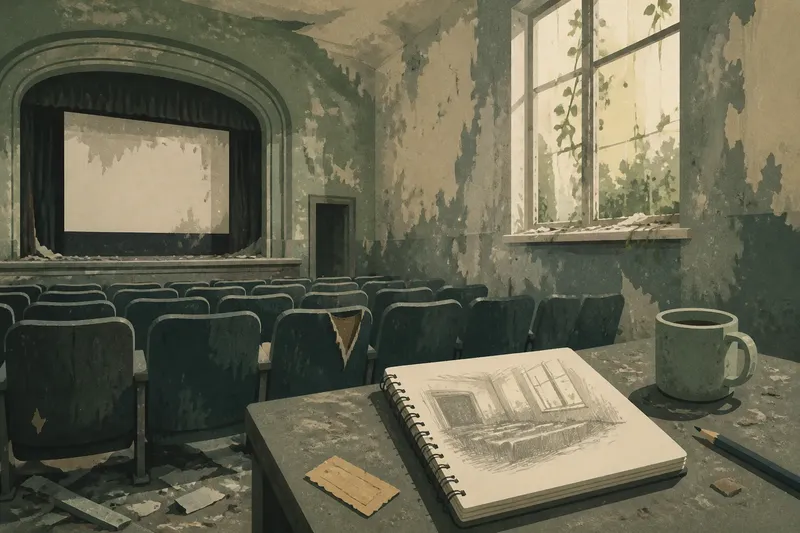
You have half an hour, a notebook open and a thought that keeps returning: abandoned places. The phrase feels charged, but it does not tell you what to do next. A creative question can turn that broad interest into a specific invitation to notice, collect or make something.
It is not a brief with a hidden answer. Think of it as a small tool for directing attention: a way to decide what to look at closely and what material to bring back to the work. That makes it useful for drawing, fiction, music, photography, design and other creative practices.
Interest and inquiry
An interest is a territory; a question is a route into it. “Abandoned places” might lead to a story about a closed cinema, charcoal studies of empty rooms or a sound piece built from a building’s quiet details. Each route begins by choosing what to notice.
Ask what keeps catching your attention. Perhaps it is the trace of a former use, a locked door, or the way dust gathers on a windowsill. You need not explain why the detail matters. Name it plainly, then turn towards it.
“What remains after a place is abandoned?” could prompt broad reflection. “Which marks on a closed cinema’s seats suggest how people once used the room?” points towards specific material: scuffs, torn fabric, a dropped ticket. The second question is easier to answer through observation, yet it does not prescribe what the work should say.
Questions with handles
A workable question includes something you can attend to: a situation, detail, tension or relationship. “How can I show loneliness?” has few edges. “What might someone waiting alone in a nearly empty station notice?” offers a scene to observe or invent.
But a question can be too prescriptive. “How do I draw an empty station so it feels lonely?” sets a mood and a medium before you have begun. If that direction is intentional, it may be useful; if you want to discover what the station suggests, ask instead, “Which details make an empty station feel inhabited, even when nobody is there?”
That wording could lead to a timetable, a scuffed bench, a dropped glove or an imagined encounter. The question directs attention to a relationship rather than a single effect. Its opening word matters less than whether different answers could still be relevant.
Boundaries that help
An open question can still be too large for one sitting. “What does it mean to be alone?” may invite more reflection than a short evening session can hold. Give it a handle: a particular room, a brief encounter, a material or the sound of one object.
There is little benefit in naming every aspect of the work at once. Subject, medium, mood, audience and intended meaning can turn a question into a disguised assignment. Choose one useful point of attention, then decide what to do with it as you work.
A spoken check can help: can you imagine a first action in response? “What is interesting about memory?” may lead to more general pondering. “Which detail in a familiar kitchen changes when you remember it from childhood?” suggests looking, sketching or writing, without deciding what the answer must be.
Shaping a creative question
- Name the interest. Write it plainly, such as “night buses”. If you cannot name it clearly, jot down a phrase or image that has been returning.
- Identify the detail. Note what draws your attention: passengers, reflections in the windows, the route, or the quiet between stops. If several details compete, choose one you can picture examining.
- Set a boundary. Pick a manageable part of the subject, such as one stop or a view through glass. If the subject still feels too large, narrow it to a single moment or object.
- Ask an open question. Turn the detail into an inquiry: “What can a view through a night-bus window reveal about the person watching?” If it dictates a single answer, remove the prescribed conclusion.
- Check for a first move. Imagine making a note, sketch or sound in response. If no action comes to mind, name a more tangible detail; if only one result seems acceptable, loosen the wording.
- Gather a trace. Make a few notes, marks, lines or sounds. If the inquiry yields material you want to examine, continue; if it feels flat, change the question or follow another detail.
Say you are interested in discarded packaging. You notice folded corners and labels left after an object has been used, then choose a paper wrapper on a kitchen table as your focus. The question “What might this wrapper’s folds suggest about the hands that opened it?” leads you to sketch the creases, note where the paper has torn, and compare possible ways it was handled. The resulting drawing or notes provide material to develop, though they do not settle who opened it or why.
When the question stalls
How do I choose a subject?
Start with something that has caught your attention: a phrase overheard, a recurring shape, a small irritation or an image you remember. If several subjects compete, choose the one with a detail you can readily observe, recall or invent.
How specific should the question be?
Make it specific enough to suggest a first action, but not so narrow that only one outcome counts. Naming a setting or detail often helps; prescribing the meaning, medium and finished form may make the inquiry feel like an assignment.
Can I change the question midway?
Yes. If the work draws your attention to a different detail, rewrite the question to match what you are actually noticing. The wording is a working tool, not a contract.
What if the question has no answer?
It can still be useful if it leads you to notice, make or compare something. Some creative questions are better at generating material than at producing a neat solution.
Use the question lightly
It is not worth building an elaborate system of questions before you begin. One clear inquiry can be enough for a first session. If it feels flat after you have made a few marks or notes, change a word, focus on another detail or set the question aside.
As the work develops, the question may sharpen or disappear from view. Its practical value is the material it helps you gather: a remembered image, an observed mark, a line of dialogue or a sound worth pursuing.
For your next creative question, start with one detail you can actually attend to and name an action that could bring it into view. That gives the idea somewhere to begin—and gives you something specific to carry into the next session.